

Since 12 August 2026, the new European packaging regulation PPWR – Packaging and Packaging Waste Regulation (EU) 2025/40 has in principle applied directly in all EU member states. For manufacturers of sealants, adhesives, coatings, mortars and other construction chemicals it is far more than a new waste law: packaging is becoming part of product compliance.
From the cartridge to the IBC
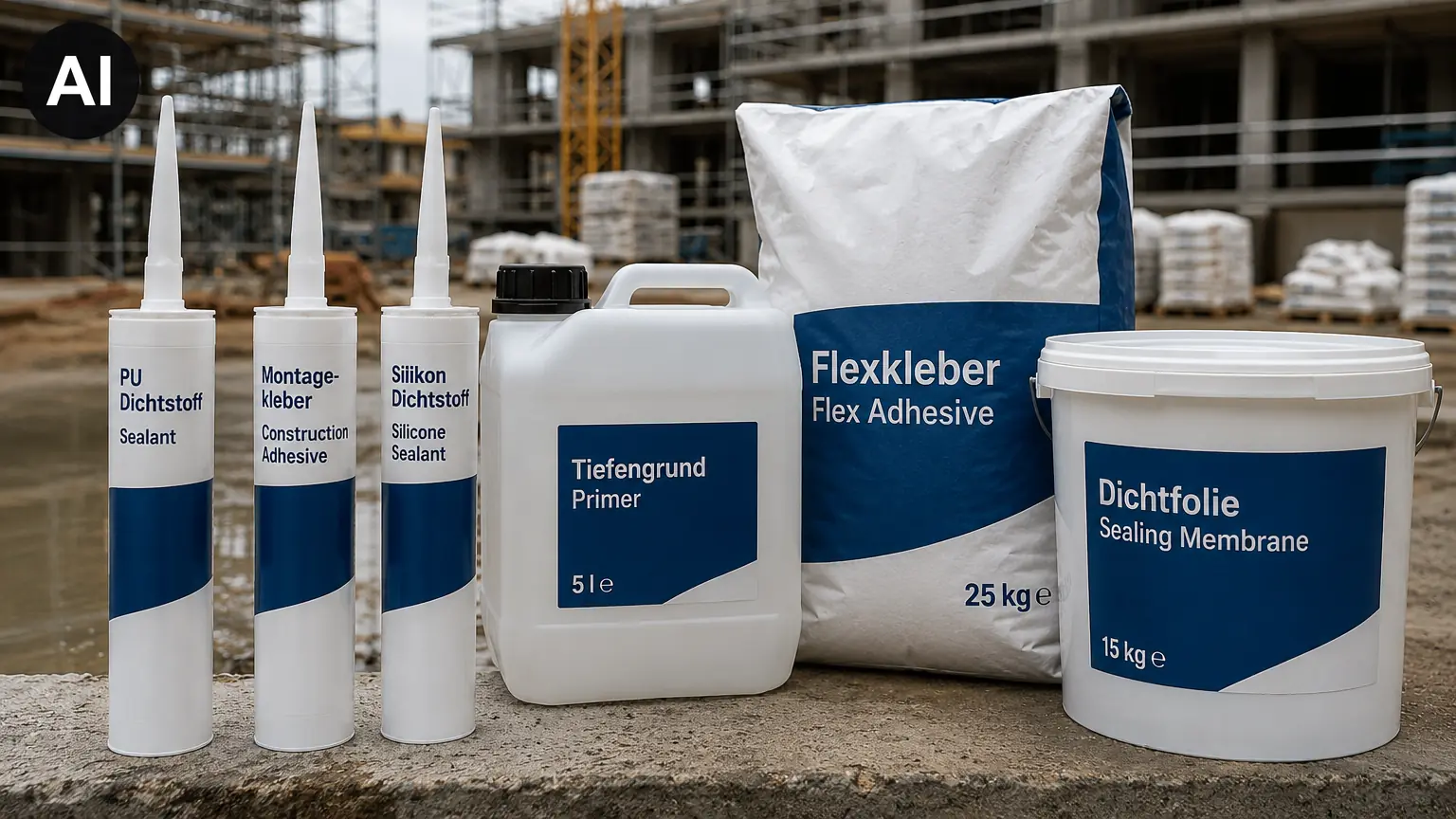
In construction chemistry the PPWR affects practically the entire packaging chain: plastic cartridges, foil packs, pails, jerrycans, drums, sacks, IBCs, pallets and transport packaging.
Three themes sit at the centre: less packaging material, better recyclability and more circularity. For plastic packaging, binding minimum shares of post-consumer recyclate come on top.
For “other plastic packaging” the PPWR provides in principle for 35 % recycled content from 2030 and 65 % from 2040. Exemptions and the final calculation methodology, however, must be checked for the specific packaging format.
Design for recycling becomes a development task
Particularly relevant for construction chemistry: packaging rarely consists of a single material. Cartridge, plunger, nozzle, label, printing ink, closure or barrier film can all influence recyclability.
The PPWR therefore introduces a European design-for-recycling system step by step. From 2030, packaging is to be classified by its recyclability. Companies should therefore treat packaging development as systematically as a formulation change in future.
Unnecessary packaging volume becomes an issue too. The regulation requires weight and volume to be reduced to what is functionally necessary. For certain transport, grouped and e-commerce packaging a maximum empty-space ratio of 50 % will additionally apply.
Reuse also affects industrial logistics
For certain transport packaging, reuse targets apply from 2030. These can include pallets, crates, drums or jerrycans, for example. For pallet wrappings and strapping bands the EU already adopted certain exemptions from particularly far-reaching reuse obligations in 2026.
This makes one thing clear: the PPWR concerns not only packaging development but also purchasing, production, logistics, regulatory affairs and supplier management.
Points to watch
- Build packaging bills of materials: document the materials and weights of every component.
- Check recyclate feasibility: can cartridges, pails or jerrycans technically be switched to PCR material without compromising product protection and shelf life?
- Assess recyclability early: take labels, printing inks, closures and multi-material structures into account.
- Involve suppliers: contractually secure recycled content, material origin and proof of conformity.
- Do not wait for 2030: packaging changes need tooling, testing, approvals, stability trials and in some cases new filling processes.
Conclusion
The PPWR turns packaging into a strategic development parameter. In construction chemistry in particular, this creates a classic conflict of objectives: maximum product protection and long shelf life alongside less material, more recyclate and better recyclability.
Whoever analyses their packaging portfolio systematically now can not only meet the coming requirements but reduce packaging costs, material input and variant diversity at the same time.